
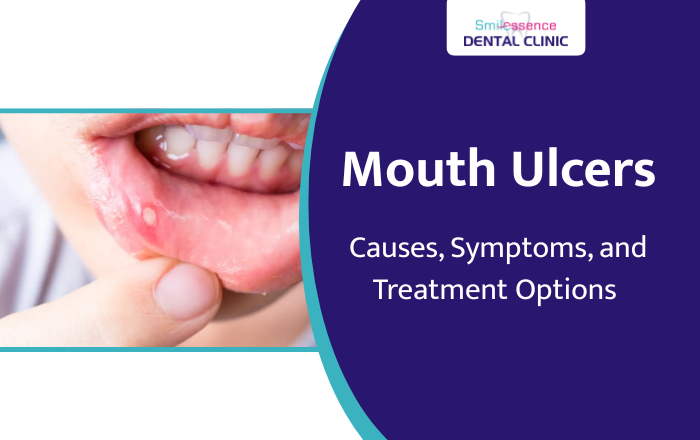
Have you ever woken up with that sharp, burning pain inside your mouth that makes even drinking water feel uncomfortable? If yes, you’ve probably dealt with a mouth ulcer. These tiny sores can turn your entire day upside down. The good news is — mouth ulcers are common, manageable, and very much treatable. In this guide, we’ll walk you through everything you need to know about mouth ulcer causes, symptoms, and the best treatment options available today.
What Are Mouth Ulcers?
Mouth ulcers — also called canker sores — are small, painful sores that form inside the mouth. They appear on the inner cheeks, gums, tongue, or lips. They look like round or oval sores with a white or yellow center and a red border around them.
The reason they hurt so much is simple — the sore exposes nerve endings in the soft lining of your mouth. Even spicy food or a sip of lemon juice can feel unbearable.
Mouth ulcers are not contagious. You cannot catch them from someone else.
Common Causes of Mouth Ulcers
Understanding what triggers a mouth ulcer can help you avoid them in the future. Here are the most common causes:
• Accidental injury — Biting your cheek, brushing too hard, or a sharp edge on a broken tooth can damage the soft tissue inside your mouth and lead to an ulcer.
• Nutritional deficiencies — Low levels of Vitamin B12, iron, zinc, and folate are directly linked to recurring mouth ulcers. Studies show that nearly 28% of people with frequent mouth sores have a Vitamin B12 deficiency.
• Stress and anxiety — When you’re stressed, your immune system weakens, making your mouth more vulnerable to ulcers.
• Hormonal changes — Many women develop mouth ulcers during their menstrual cycle, pregnancy, or menopause.
• Certain foods — Citrus fruits, spicy food, tomatoes, nuts, and chocolate are known triggers in many people.
• SLS in toothpaste — Sodium Lauryl Sulfate, a common ingredient in toothpastes, can irritate the inner lining of your mouth and increase ulcer breakouts. Switching to an SLS-free toothpaste has helped many people reduce their frequency.
• Underlying health conditions — Conditions like Crohn’s disease, celiac disease, or autoimmune disorders can cause recurring mouth ulcers as a symptom.
Symptoms You Should Watch For
Most mouth ulcers are easy to spot. Common symptoms include:
• A burning or tingling feeling before the ulcer appears
• A visible sore with a white or yellow center and red edges
• Pain while eating, drinking, or talking
• Mild swelling around the sore
When should you see a dentist?
See a dentist right away if:
• Your ulcer hasn’t healed in 3 weeks
• The sore is unusually large or keeps getting bigger
• You have multiple ulcers appearing at the same time
• The ulcer is accompanied by fever, swollen lymph nodes, or difficulty swallowing
• You notice a hard raised border or unexplained bleeding around the sore
A mouth ulcer that refuses to heal can, in rare cases, be an early sign of oral cancer. Never ignore a sore that stays beyond 3 weeks.
Best Treatment Options for Mouth Ulcers
Home Remedies That Work
• Saltwater rinse — Mix half a teaspoon of salt in warm water and rinse for 30 seconds, 3–4 times a day. It reduces swelling and keeps the area clean.
• Honey — Apply raw honey directly onto the ulcer. Research confirms honey reduces both pain and the size of mouth ulcers faster than many OTC products.
• Aloe vera gel — Dab fresh aloe vera on the sore for a cooling, soothing effect. It helps reduce inflammation naturally.
• Turmeric paste — Mix a pinch of turmeric with water and apply it to the ulcer. Curcumin in turmeric is a natural anti-inflammatory agent that supports healing.
• Ice or cold water — Holding cold water in your mouth provides quick, short-term relief from pain.
Over-the-Counter Options
• Topical gels with benzocaine — These numb the area and reduce pain quickly
• Antiseptic mouthwashes — Help keep bacterial levels in check while the ulcer heals
• Vitamin B12 or B-complex supplements — Particularly helpful if deficiency is the root cause
Professional Treatment
When home remedies don’t work, a dentist can offer faster solutions:
- Laser treatment — A dental laser targets the ulcer directly, seals it, and reduces pain almost immediately. Most patients feel relief after one session.
- Prescription gels or pastes — Stronger than OTC products and more effective for stubborn ulcers
- Cauterization — The ulcer is chemically sealed to speed up healing
- Blood tests and investigation — To find out if a deficiency or health condition is causing recurring mouth ulcers
How to Prevent Mouth Ulcers
Prevention is always easier than dealing with the pain. Here’s what you can do:
- Eat foods rich in Vitamin B12, iron, and zinc — eggs, leafy greens, lentils, and lean meat
- Switch to an SLS-free toothpaste
- Manage stress through exercise, sleep, and relaxation techniques
- Stay well-hydrated throughout the day
- Use a soft-bristled toothbrush and brush gently
- Visit your dentist regularly for check-ups
FAQs
Q1. How long do mouth ulcers last?
Minor ulcers heal in 7–14 days. If yours lasts beyond 3 weeks, consult a dentist.
Q2. Can stress cause mouth ulcers?
Yes. Stress weakens your immune system and is one of the most common triggers.
Q3. What foods should I avoid?
Avoid spicy, salty, and citrus-heavy foods until the ulcer heals completely.
Get Relief from Mouth Ulcers at Smilessence Dental Clinic, Wagholi
If your mouth ulcer has lasted more than two weeks, keeps coming back, or is causing serious discomfort — it’s time to see a dentist.
Smilessence Dental Clinic in Wagholi, Pune, led by Dr. Kunal Bonde, offers proper diagnosis and effective mouth ulcer treatment in a calm and friendly environment. Whether it’s laser treatment, a simple consultation, or finding the root cause of your recurring sores — Dr. Kunal Bonde and the team at Smilessence are here to help you feel better.
📞 Book your appointment at Smilessence Dental Clinic, Wagholi today — and stop letting mouth ulcers slow you down.