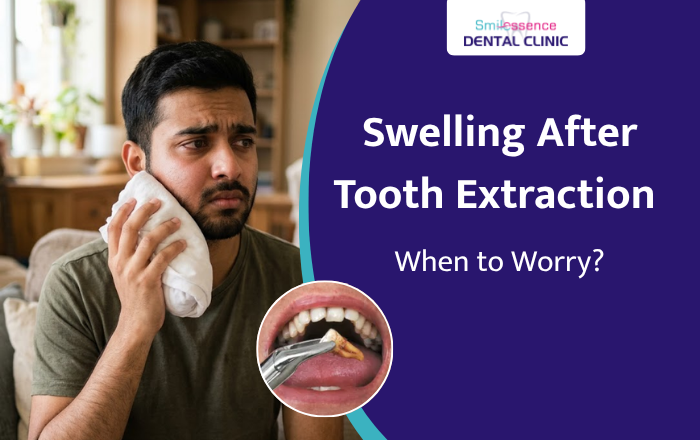
You just got a tooth pulled, and now your cheek looks twice its normal size. Don’t panic — swelling after tooth extraction is your body’s natural way of healing. But here’s the important question: how do you know when that swelling is normal, and when it’s a sign something has gone wrong?
This guide will walk you through everything in simple, clear language — no scary medical jargon, just real, helpful information.
Is Swelling After Tooth Extraction Normal?
Yes, absolutely. When a tooth is removed, your body sends blood and immune cells to the area to begin repair. This causes inflammation — which shows up as swelling, mild redness, and tenderness around the cheek and jaw.
This is your body doing exactly what it should.
However, swelling after tooth extraction that keeps getting worse after day 3, or comes with other symptoms, is something you should not ignore.
How Long Does Swelling Last?
Here’s a simple day-by-day breakdown:
- Day 1: Swelling starts a few hours after the procedure
- Day 2–3: Swelling peaks — this is completely normal
- Day 4–5: Swelling slowly begins to go down
- Day 7+: Most swelling should be gone
For wisdom tooth removals, swelling can last up to 10 days due to the complexity of the procedure. Simple extractions usually resolve much faster.
Studies show that post-extraction swelling peaks at 48–72 hours and resolves within 5–7 days in most patients.
How to Reduce Swelling After Tooth Extraction
Good news — there’s a lot you can do at home:
1. Use an ice pack on your cheek for the first 24 hours — 20 minutes on, 20 minutes off. Cold limits swelling before it peaks.
2. Keep your head elevated — even while sleeping. Use an extra pillow. This stops blood from pooling in your face overnight.
3. Take medication as advised — Ibuprofen reduces both pain and inflammation. Always follow your dentist’s instructions.
4. Eat soft, cool foods — yogurt, mashed potatoes, cold soups. Avoid hot, spicy, or crunchy food for at least 48 hours.
5. Rinse with warm salt water — but only after 24 hours. Gentle rinsing 2–3 times a day keeps bacteria away from the site.
6. Skip the straw and cigarettes — suction can dislodge the blood clot, leading to a painful condition called dry socket, which causes its own type of swelling and intense pain.
When Should You Worry? 5 Warning Signs
This is the part that matters most. Watch out for these signs:
1. Swelling Gets Worse After Day 3
If swelling after tooth extraction is still increasing on day 4 or later — not improving — that is a red flag for infection.
2. Fever Along With Swelling
A fever above 101°F (38.3°C) combined with swelling means your body may be fighting a bacterial infection. Call your dentist the same day.
3. Pus or Discharge From the Socket
Any yellow or white discharge from the extraction site is a clear sign of infection. Do not wait and watch — seek dental attention immediately.
4. Pain That Gets Worse, Not Better
Pain should decrease gradually after day 2. If it’s getting sharper, throbbing, or spreading to your ear or jaw, you may have dry socket or an infection.
5. Swelling Spreading to Your Neck or Throat
This is a dental emergency. Swelling after tooth extraction that reaches the neck, floor of the mouth, or affects swallowing or breathing needs emergency medical care right away — do not delay.
Swelling vs. Infection — A Quick Comparison
| Normal Swelling | Possible Infection | |
|---|---|---|
| Timing | Peaks day 2–3, improves after | Gets worse after day 3 |
| Pain | Gradually decreasing | Increasing or throbbing |
| Fever | No | Often yes |
| Discharge | None | Pus or bad taste |
| Skin | Normal colour | Red and hot to touch |
If two or more signs point to infection — call your dentist today.
FAQ
Q: Is it normal for my face to swell after tooth removal?
Yes. Mild to moderate swelling is expected for the first 3–5 days. It is your body’s healing response.
Q: Why is swelling worse on day 3?
Day 3 is the peak of normal swelling. If it improves from day 4 onward, you’re healing well. If it worsens — contact your dentist.
Q: How do I sleep with a swollen face after extraction?
Sleep with your head elevated using an extra pillow. Avoid sleeping on the same side as the extraction.
Q: Can swelling after tooth extraction last 2 weeks?
For simple extractions, no. If swelling hasn’t improved after 10–14 days, visit your dentist — it may indicate a deeper issue like infection or a retained root fragment.
Get the Right Help — Smilessence Dental Clinic, Wagholi
If you are dealing with swelling after tooth extraction and you’re not sure whether it’s normal — trust a qualified dental professional to give you the right answer.
At Smilessence Dental Clinicin Wagholi, Pune, Dr. Kunal Bonde (MDS) brings postgraduate-level knowledge to every tooth extraction procedure — from simple removals to complex surgical cases — with a focus on patient comfort and smooth, safe recovery.
If your swelling is making you nervous, don’t sit at home guessing.
📞 Book your appointment with Dr. Kunal Bonde at Smilessence Dental Clinic, Wagholi today.
Early attention means faster healing and complete peace of mind.
Because your smile deserves the best care — and so do you.