
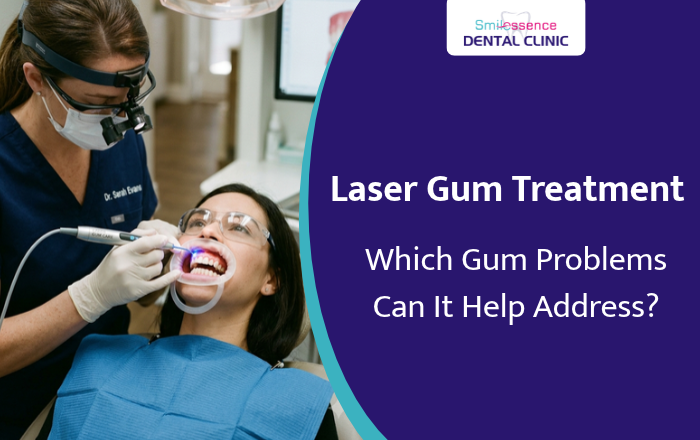
Bleeding when you brush, swollen gums or a smell that will not go away are easy to ignore, but they are often the first signs of a gum problem. Many people hear about laser gum treatment and wonder if it is right for them.
The honest answer is that laser can help with some gum problems, in the right situation, and it is not a shortcut for every case. This guide explains which gum conditions it may help address, how the procedure works, what recovery looks like and what it cannot do.
What Is Laser Gum Treatment?
Laser gum treatment uses a focused beam of light energy to work on gum tissue, either to clean infected gum pockets or to reshape the gums. It is also called laser periodontal therapy or laser gum surgery.
The laser is used by a trained dentist, often together with a regular professional cleaning. Depending on the setting, it can remove inflamed tissue, reduce bacteria in gum pockets and reshape gum tissue with little bleeding. It is a tool, not a treatment on its own, and the dentist decides whether it suits your gums.
Which Gum Problems Can Laser Treatment Help Address?
Laser may be considered for gum disease, gum overgrowth, gummy smile, dark gums and tight tissue bands. Here is how it may fit in each case.
Gingivitis and Early Gum Disease
Red, swollen gums that bleed on brushing are signs of gingivitis. In many people it settles with thorough cleaning and better home care. Laser is sometimes used along with cleaning to reduce bacteria and inflamed tissue.
Periodontitis (Gum Pockets)
When gum disease advances, gaps called pockets form between the teeth and gums. The usual first step is deep cleaning (scaling and root planing). Laser may be added to help clear bacteria from the pockets and support healing. How well this works depends on how deep the pockets are and how much bone has been lost.
Gum Overgrowth
Some people have extra gum tissue that covers the teeth, caused by plaque, hormonal changes, certain medicines or braces. Laser can trim this tissue precisely, though the cause also needs to be addressed.
Gummy Smile and Uneven Gum Line
If too much gum shows when you smile, a dentist may suggest gum contouring with a laser to reshape the gum line. It is not suitable for every gummy smile, since some are linked to the jaw or lip. You can read more in our guide on how to fix a gummy smile.
Dark or Uneven Gum Colour
Laser can be used to lighten dark patches of gum for cosmetic reasons after the dentist checks that the colour is harmless.
Tight Tissue Bands (Frenum)
A tight band of tissue under the tongue or lip can pull on the gums or limit movement. A laser can release it in a short procedure.
What Are the Signs You May Need Gum Treatment?
Do not wait for pain, as gum disease is often painless in the early stages. See a dentist if you notice:
- Gums that bleed when you brush or floss
- Red, puffy or tender gums
- Bad breath that does not improve after brushing
- Gums pulling away from the teeth, so teeth look longer
- Loose or shifting teeth
- Pus or a bad taste near the gum line
Smoking, diabetes, poor brushing habits and stress can all make gum problems worse.
How Is Laser Gum Treatment Done?
Treatment starts with an examination, so the plan is based on your gums rather than on the tool. A typical visit may include:
- Examination: the dentist checks gum pockets, bleeding and bone levels, and may advise a dental X-ray.
- Cleaning: plaque and tartar are removed first, as laser does not replace this step.
- Numbing: a local anaesthetic gel or injection may be used for comfort.
- Laser use: the laser is applied to the affected gum areas, or used to reshape the gum line.
- Instructions: you are told how to care for your gums at home and when to return.
The number of visits depends on how much of the mouth needs treatment. You can see what the clinic offers on the laser gum treatment page.
Recovery and Aftercare
Many people return to routine activities soon after, but healing varies. For a few days:
- Brush gently with a soft toothbrush
- Avoid very hot, spicy or hard foods
- Use any prescribed mouthwash as directed
- Avoid smoking, as it slows healing
- Attend follow-up visits
Mild tenderness or sensitivity can happen. Call your dentist if swelling, bleeding or pain gets worse instead of better.
What Laser Gum Treatment Cannot Do
Laser does not remove the cause of gum disease, which is plaque. Daily care still decides how your gums do over time.
- It cannot replace regular brushing, flossing and professional dental cleanings
- It cannot rebuild bone that is already lost, so severe gum disease may need other treatment
- It may not suit everyone, for example some people with certain medical conditions or medicines, which the dentist will ask about
- Results differ from person to person, and gum problems can come back without good home care
Some patients do well with deep cleaning alone, and others need surgery. Your dentist will explain which route fits you.
Questions to Ask Your Dentist
- What is the exact problem with my gums?
- Do I need a deep cleaning first?
- Is laser suitable for my case, and why?
- How many visits will I need?
- What can I do at home to keep my gums healthy?
Frequently Asked Questions
1. Is laser gum treatment painful?
Many patients find it comfortable, and numbing is used when needed. You may feel some tenderness afterwards. Tell your dentist if anything hurts during the procedure.
2. Does laser gum treatment cure gum disease?
Gum disease is a long-term condition that needs ongoing control. Laser may help treat the affected areas, but good home care and regular check-ups are needed to keep gums healthy.
3. How long does laser gum treatment take?
It depends on the area treated. A small procedure such as releasing a tight tissue band may be short, while treating several areas may take more than one visit.
4. Is there bleeding after laser gum treatment?
Laser can limit bleeding during treatment, but slight oozing or tenderness can occur afterwards. Follow your dentist’s aftercare advice and call if bleeding does not stop.
5. Can laser treatment fix receding gums?
Laser does not grow back gum that has receded. It may help treat infection around the area, but receding gums may need other treatment. A dental examination will show what is suitable.
6. Who should avoid laser gum treatment?
People with certain medical conditions, or those who are pregnant, may need to wait or have a different plan. Tell your dentist about your health history and medicines before treatment.
Book a Gum Check-Up in Wagholi, Pune
Gum problems are easier to manage when they are found early. If your gums bleed, look swollen or feel tender, a dental check-up can show what is happening and whether laser treatment makes sense for you.
Smilessence Dental Clinic, led by Dr. Kunal Bonde (MDS, Root Canal Specialist) with 13+ years of experience, offers gum care and dental consultations in Wagholi.
Address: 1st Floor, Shop No. 103, Rainbow Crossroads, Bakori Phata, opposite BJS College, above McDonald’s, Wagholi, Pune, Maharashtra 412207.
To book an appointment, call 90675 45188 or contact us online.
This article is for general information and does not replace a dental consultation. Please consult a dentist for advice about your gums.